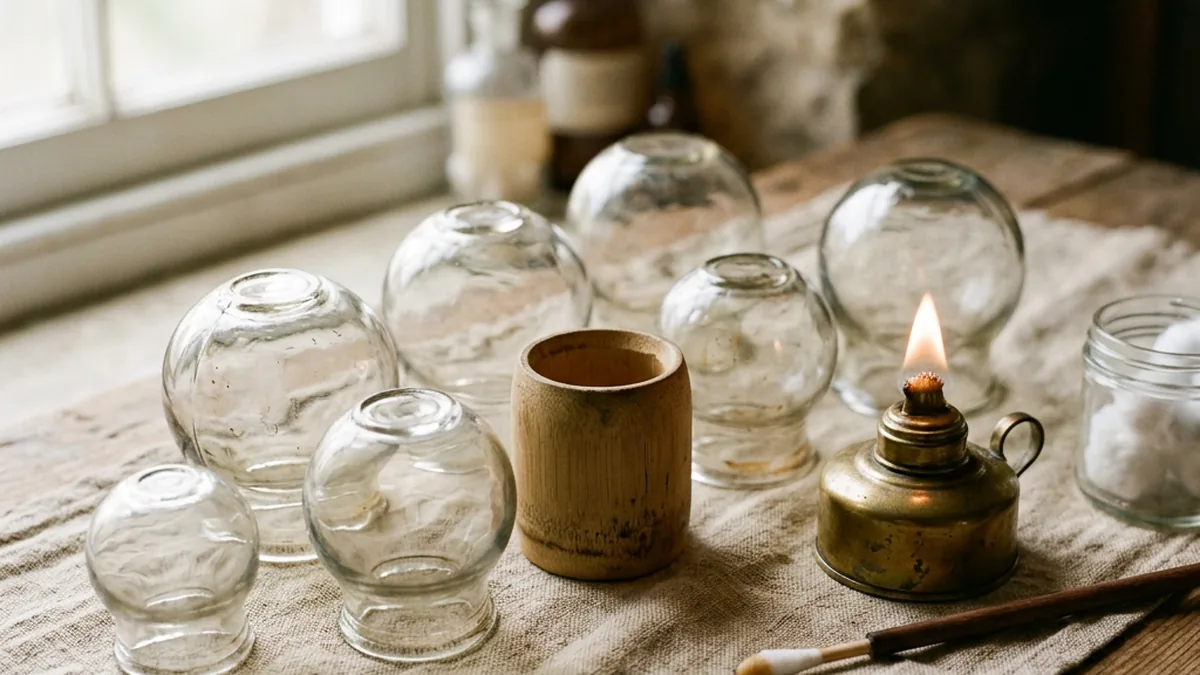
Cupping Guide
The flash of flame lasts under a second; what's worth understanding is the slow, quiet pull that follows — an old Chinese craft still practiced cup by glass cup, out where Balboa Street runs into the fog.
What Fire Cupping Is (and Is Not)
Fire cupping is a traditional Chinese practice in which a practitioner briefly warms the air inside a glass cup with a flame, sets the cup on your skin, and lets the cooling air contract into suction that lifts skin and the tissue just beneath it. That is the entire mechanism: fire creates the vacuum, and the vacuum creates the pull. At our Outer Richmond studio we practice the dry form only — no piercing, no bloodletting, nothing more dramatic than glass, warmth, and a steady hand. It's the same traditional Chinese cupping SF families have practiced in home kitchens for generations.
Two clarifications matter before you book. Wet cupping — a separate practice in which the skin is nicked so blood enters the cup — is something we don't offer and never will; every session here is dry cupping, full stop. And we make no medical promises: fire cupping therapy stays on our menu because many guests find the pull eases muscular tightness in a way pressing hands can't quite match, and it is not a substitute for medical diagnosis or treatment.
The flame's only job is to create the vacuum, and the pull is the whole point.
How a Fire Cupping Session Works
A fire cupping session in our studio is quieter and less theatrical than the videos make it look. You lie face down with your back bared, and your therapist works through a set of glass cups one at a time — a brief flash of flame near each cup, cup onto skin, a soft thock as the seal takes hold. Most first-timers say the strangest part is the first minute, when the pulling sensation registers as unfamiliar. After that, nearly everyone settles in.
Where the Flame Actually Goes
This is the worry underneath every question about fire cupping, so here is the direct answer: the flame never touches your skin, and it never comes close. The therapist passes a small flame inside the cup for a moment to warm the air, takes it away, and only then places the cup on your back. By the time glass meets skin there is no fire anywhere near you — just a comfortably warm cup. The flame's only job is to create the vacuum, and the pull is the whole point.
Glass Cups vs. Plastic Pump Cups
One thing worth saying out loud: a plastic pump cup and a glass fire cup produce the same basic suction. A studio using the pump kind isn't cheating anyone — the mechanism is identical, valve instead of flame. The fire version is the traditional craft, the one that existed long before plastic valves did, and it's what people typing glass cupping San Francisco into a search bar are usually picturing. We prefer it partly for the feel of warm glass on a foggy Richmond District afternoon, and partly because the amount of warming lets a practiced therapist fine-tune the strength of every single cup.
Stationary Cups and How Long They Stay
We work with stationary cups: they go on, they stay put, and they come off. A typical placement holds for roughly five to ten minutes per area — long enough for the tissue to respond, short enough that the session never turns into an endurance event. Your therapist watches how your skin reacts and will lift a cup early if the color deepens fast or you'd simply like less. The release is gentle, too: a fingertip pressed at the rim lets air hiss in, and the cup lets go on its own.
The Marks: What to Expect
The question our front desk hears most isn't about the flame — it's some version of how dark the circles get and how long until they're gone. So, mechanics first. When a cup lifts tissue, small blood vessels near the surface can break, leaving a round mark anywhere from faint pink to deep plum. The marks are flat, generally painless, and temporary — lighter ones fade in a few days, darker ones over a week or two. Each circle is essentially a suction print, the record of a pull rather than a blow.
We tell every first-timer the same thing: a plum-dark ring says more about how readily your skin bruises than about anything wrong inside you. Skin type, suction strength, and time under the cup explain most of the variation. If visible circles would be awkward — a wedding, a backless dress, a swim — count back two weeks and book accordingly. Our cupping marks explained guide covers all of this in more detail if you want the long version.
Safety, Hygiene and Who Should Skip It
Performed by a trained practitioner on intact skin, dry fire cupping is generally considered low-risk, with the temporary marks as the main side effect. The hazard people imagine — getting burned — is managed by the basic discipline of the craft: flame warms the cup, flame leaves, cup goes on warm rather than hot. Hygiene is the less glamorous half of safety, and it matters just as much. Our glass cups are cleaned and sterilized between guests, and we'd invite you to ask that exact question of us or of any studio you ever visit. A good one will answer without flinching.
Some people should skip the cups or clear them with a doctor first. If you have a bleeding disorder, take blood-thinning medication, are pregnant, or have broken, sunburned, or irritated skin where the cups would sit, tell us when you book and check with your physician before your visit. And one caveat we mean sincerely: this is a comfort practice, not medicine. If your pain is sharp, new, or getting worse, see a doctor before you see us.
Fire Cupping at Our Outer Richmond Studio
A lot of fire cupping in San Francisco happens as a line item on a spa menu. Ours is the other kind: an independent neighborhood studio at 3735 Balboa St, between 38th and 39th Avenue, with licensed massage therapists and the same therapist every visit — which matters more for cupping than almost any other service, because your therapist learns how your skin responds and adjusts over time. Pricing is published and plain. A standalone cupping session is $45, adding cups to any massage is $30, and the massage-plus-cupping combo runs from $95 for 30 minutes to $115 for 60 and $190 for the full 120. The Cupping Therapy service page and our Services & Pricing page carry every number.
Getting here is straightforward whether you typed fire cupping near me from a Sunset apartment or rode the 38 Geary out from downtown San Francisco. We're open seven days a week, 9:30 AM to 7:30 PM, with online booking, or call and text at (415) 379-9739; walk-ins work when a therapist is free, but calling ahead is the wiser move. Street parking on Balboa and the side streets is usually manageable. And if you've ever cut short a run at Ocean Beach because your upper back tightened before your legs did, you already know why this old craft still earns its keep out here.