Massage Guide
Ask ten San Franciscans what acupressure is and you'll get ten answers, most of them involving needles that aren't there. Here is the plain version, from a studio that has done little else on Balboa Street for years.
What Acupressure Massage Is, and What It Isn't
Healing Shiatsu offers acupressure massage in San Francisco from our studio at 3735 Balboa St in the Outer Richmond: fully clothed, no-oil bodywork built on sustained thumb, finger and palm pressure at specific points along the body's meridians, from $65 for 30 minutes. In our tradition this is simply called Shiatsu — the Japanese word means 'finger pressure' — so if you searched for acupressure and landed on a Shiatsu studio, you are in the right place. The word describes our method; the rest of this page describes what that method feels like on the table.
The idea behind acupressure comes from traditional East Asian medicine: a network of channels, or meridians, runs through the body, and specific points along them — tsubo, in Japanese — respond to pressure. Acupuncture works those points with fine needles. Acupressure works the same points with a thumb, a fingertip, a knuckle or the heel of the hand, held steadily for a few seconds at a time. That is the whole difference in mechanism, and it is the reason plenty of people who would never book acupuncture are perfectly happy to book this.
Acupressure vs. Acupuncture
Nothing pierces the skin. There are no needles, no electrical stimulation and no heat lamps — just pressure, applied by a licensed massage therapist rather than an acupuncturist. That also means acupressure sits inside massage licensing in California, not medicine: we are bodyworkers, and we don't diagnose or treat conditions. If you are weighing acupuncture for a specific health problem, that is a conversation for a licensed acupuncturist or your doctor, not for us, and we'll say so on the phone.
Acupressure vs. Swedish or Deep Tissue Massage
Oil-based massage — Swedish, and most of what gets marketed as deep tissue — moves along the muscle in long strokes over bare skin. Acupressure holds still. The therapist leans body weight into a point, waits, releases, and moves an inch. There is no oil, so there is no undressing: you arrive in loose clothes and stay in them under a blanket. The pressure feels more localized, because it comes through the pads of the thumbs rather than the whole palm, and certain points will feel tender in a way many guests describe as 'good pain.' If you prefer the flowing, gliding kind of massage, our deep tissue and hot stone pages describe sessions built around that instead.
Acupuncture works the points with a needle. We work the same points with a thumb, and you keep your clothes on.
How an Acupressure Session Works at Healing Shiatsu
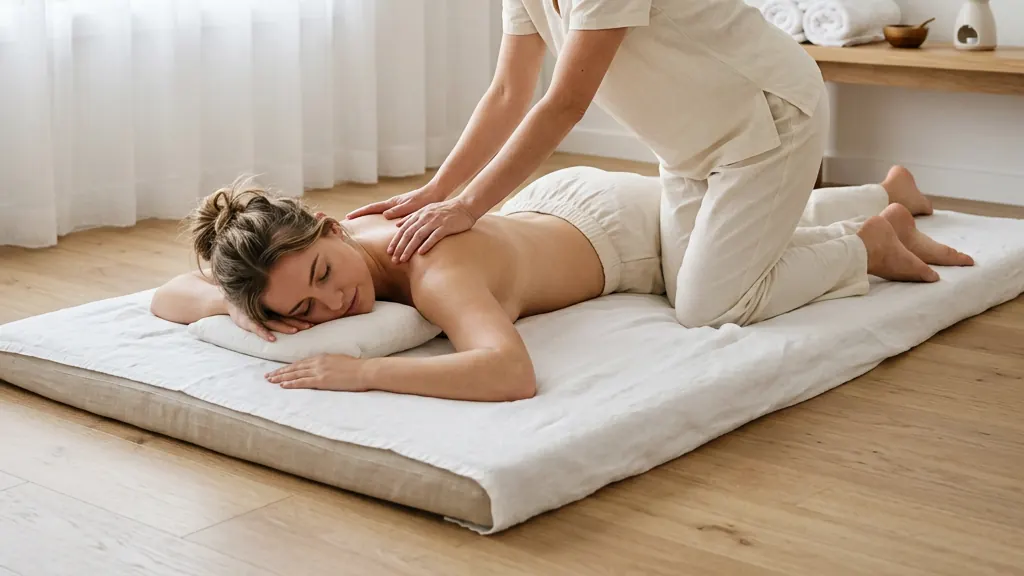
Every session starts with a short conversation: where you are tight, what you do all day, any injuries, medications or conditions we should know about, and whether you are pregnant or might be. Then you lie down on the table in your clothes, under a blanket, and your therapist begins — usually with the back, because that is where the meridians are easiest to read and where most of San Francisco carries its week.
From there the sequence moves through hips and legs, then shoulders, neck and scalp, with thumbs, fingers and palms doing the work in a continuous, rhythmic pattern. Sixty minutes covers the whole body at a sensible pace; thirty is a focused back-and-shoulders visit; ninety and one-twenty are for guests who want the legs and feet given the same attention as the spine. Nothing is rushed, and nothing happens at a pressure you haven't agreed to.
Pressure You Control
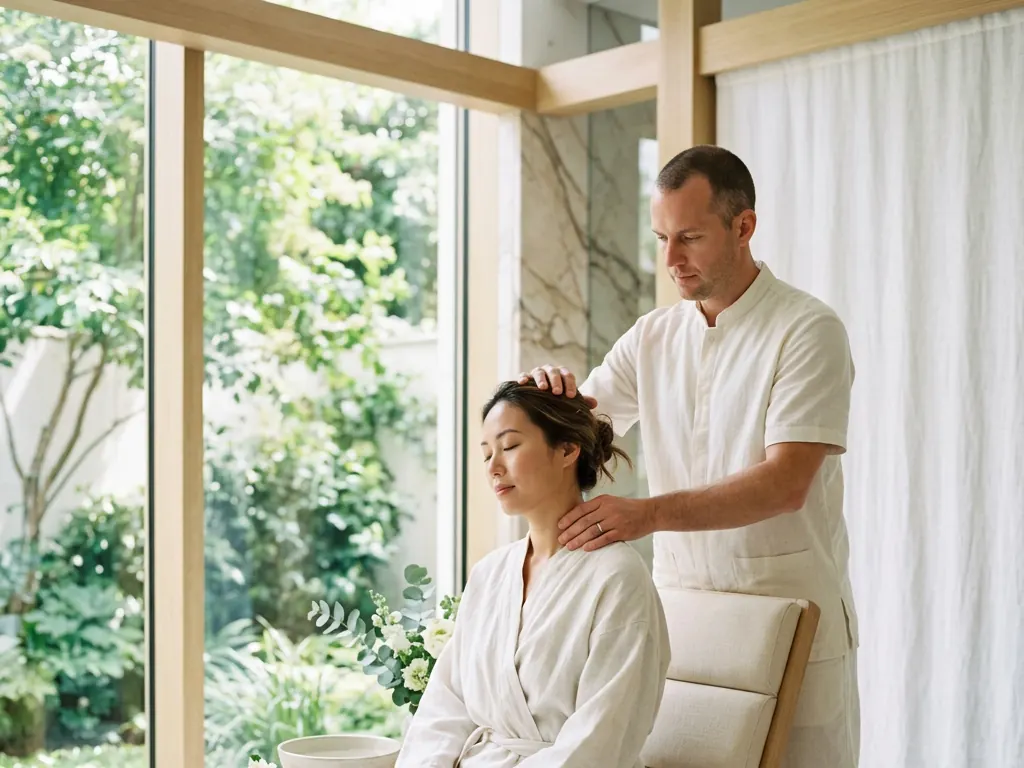
Tender points are expected. A thumb sinking into the muscle between the shoulder blades will feel intense for a few seconds and then ease — that is the sensation people come back for. Sharp, electric or radiating pain is not part of the plan, and the moment you say so, the pressure lightens or the therapist moves on. We would rather you speak up three times in a session than grit through it once.
The Points We Return to Most
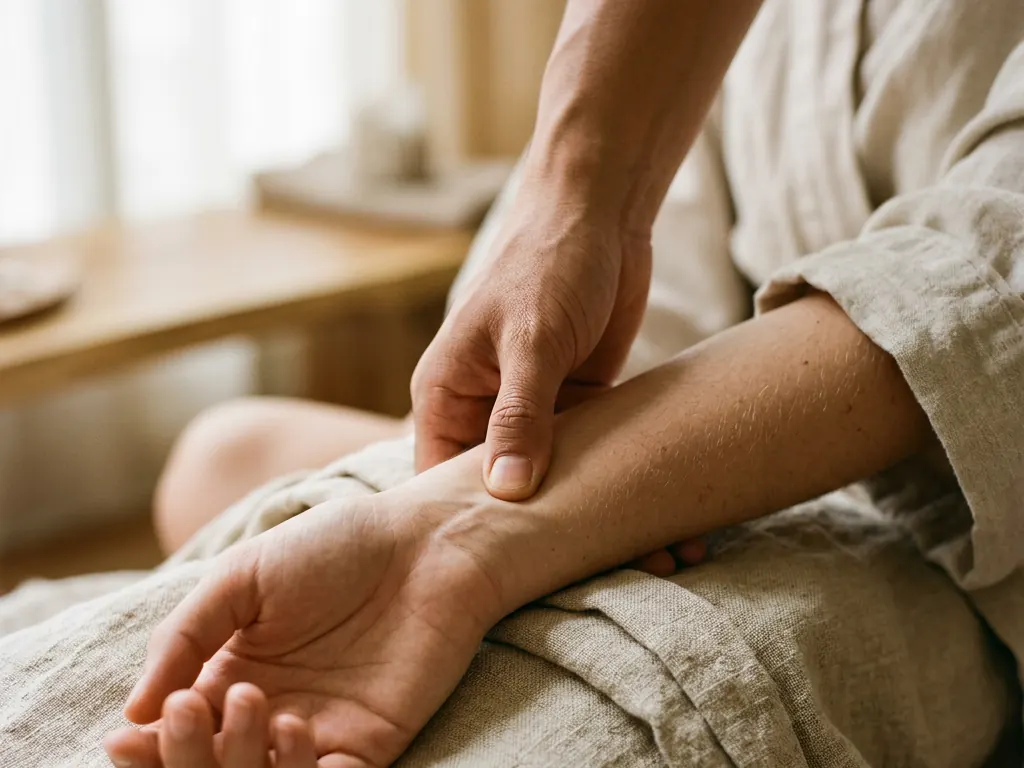
There are hundreds of named points, but a handful come up in almost every session on Balboa Street: the band between the shoulder blades and across the top of the shoulders, where laptop posture settles; the base of the skull, where the neck meets the head; the muscles either side of the lower spine; the hips and the outside of the thigh; the web between thumb and forefinger; the inner wrist, a few finger-widths below the palm; and the sole of the foot just behind the ball. Some of these carry well-known names in the tradition, and a few come with traditional cautions — the hand and certain ankle points are among those we deliberately avoid during pregnancy, which is one reason we ask.
We are not going to tell you what each point 'does.' The traditional associations are interesting, and we are happy to talk about them in the room, but they aren't claims we can back with evidence, and this site doesn't make claims we can't back. What we can say is that these are the spots where our guests hold tension, and where a few seconds of steady pressure tends to feel like something letting go.
Foot Acupressure and Reflexology
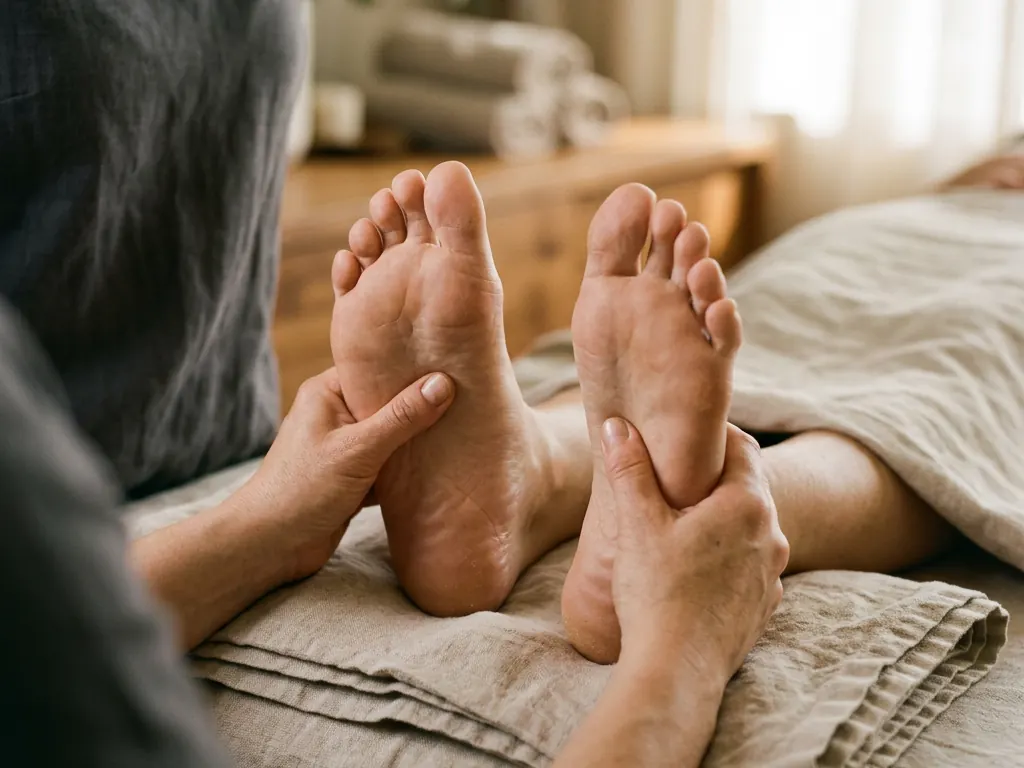
The feet deserve their own section, because foot acupressure is the version of this work most people have actually tried — often in a walk-in foot spa without knowing what it was called. Our foot sessions work the soles, arches, heels, toes and lower legs with thumb pressure, 30 minutes for $50 or 60 minutes for $75, and they pair naturally with body work: a 60-minute body session plus 30 minutes on the feet is $110. Guests who walk the Ocean Beach loop, run Golden Gate Park or spend the day standing come in for the feet first and stay for the rest.
Reflexology and foot acupressure overlap more than they differ. Both press specific points on the foot, and both are done seated or lying back with your feet in the therapist's lap. Our foot massage and reflexology page covers the session in detail, including the honest note that the maps linking foot zones to organs are traditional rather than proven. Here, the practical point: if your feet ache, this is the booking, and it is the least expensive way to try acupressure at all.
What the Evidence Says, Honestly
Acupressure has been studied far less than acupuncture, and the acupuncture research is itself mixed. The federal National Center for Complementary and Integrative Health, which reviews exactly this kind of practice, describes massage as generally safe when performed by a trained practitioner and notes that evidence for specific health benefits is limited — a fair summary of acupressure too. Small studies have looked at pressure on particular points for nausea, sleep and pain, with results that are encouraging in places and unconvincing in others. None of it adds up to a treatment we can promise you.
So we don't. What we can tell you is what guests tell us: shoulders that sit lower for a few days, a neck that turns further, sleeping better the night of a session, and the particular calm that comes from an hour of someone paying close attention to where you hurt. That is a real experience, and it is why so many of our 238 reviewers came back. It is not a substitute for seeing a doctor about a problem that persists, and if something worrying is going on — new numbness, pain that wakes you at night, a fever — see a clinician first and book with us after.
When to Tell Us First
Acupressure is gentle on paper, but sustained pressure is still pressure. Mention it when you book if you are pregnant or might be (we avoid certain points and adjust positioning), take blood thinners or bruise easily (we lighten up), have osteoporosis, a recent fracture, surgery or injury, a skin condition or open wound where we would be working, or a condition your doctor has told you to be careful with. None of these are automatic no's; they are the reasons a first conversation takes two minutes instead of thirty seconds.
Pricing, Booking and Getting to Balboa Street
Acupressure — Shiatsu — is our core session, and it is priced the way everything here is: posted in full. 30 minutes is $65, 45 is $75, 60 is $85, 75 is $100, 90 is $120 and 120 is $160. Cupping can be added for $30, hot stones for $20 and a 10-minute head massage for $20; the full list is on our Services & Pricing page. The Morning Special makes any 60-minute body session $80 before 11:30 AM, Tuesday Lady's Day is $80 for a 60-minute session for women all day, and the Sharing Package brings ten 60-minute sessions to $70 each, shareable with friends and family.
We are at 3735 Balboa St between 38th and 39th Avenues in the Outer Richmond. The 31 Balboa bus stops on our block, the 38 and 38R Geary run a couple of blocks north, and the 5 Fulton runs along the edge of Golden Gate Park two blocks south. Street parking on Balboa and the numbered avenues is usually straightforward outside of Saturday afternoons. We are open seven days, 9:30 AM to 7:30 PM: book online, call or text (415) 379-9739, or walk in when a therapist is free. If you have been searching acupressure Richmond District, acupressure near me from the Sunset, or pressure point massage in San Francisco, this is the studio those searches were looking for.